Today, as environmental awareness becomes increasingly important, the use of biodegradable bags has become a practical solution.
This product significantly contributes to reducing plastic waste pollution and improving quality of life. Let’s explore with Minh Sang Packaging the structure and key differences between biodegradable bags and oxo-degradable bags in the article below.
What is a Biodegradable Bag?
A biodegradable bag is made from natural materials such as corn starch or cassava that can naturally decompose in the environment under the influence of microorganisms, humidity, temperature, and light.
Unlike traditional plastic bags that can take hundreds of years to break down, biodegradable bags can decompose within several months to a few years, depending on the material type and environmental conditions.
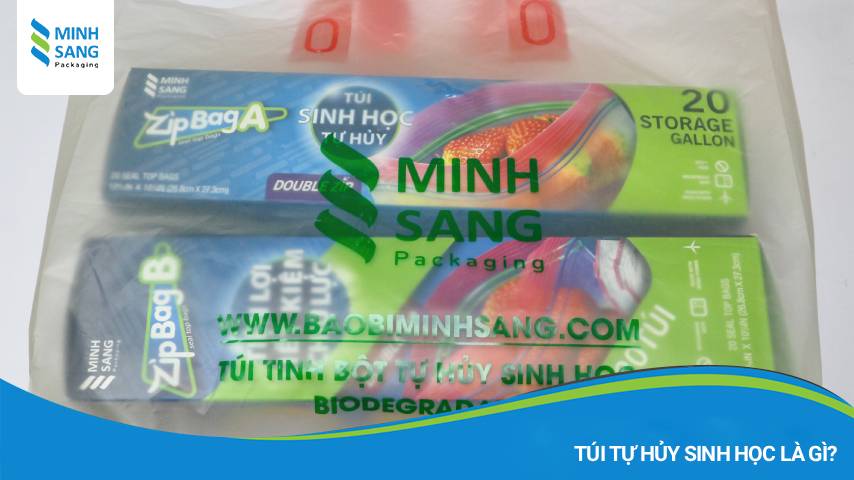
Structure of Biodegradable Bags
The decomposition mechanism of this type of bag relies on microorganisms such as bacteria, algae, and fungi. They consume and digest the polymer chains in the bag, converting them into simple inorganic substances such as CO₂, water, and organic compost. This process ensures that biodegradable bags do not persist in the environment like conventional plastic bags.
5 Benefits of Biodegradable Bags You Should Know
Environmentally Friendly:
Biodegradable bags break down within months or years instead of centuries like traditional plastic. When decomposed, they turn into safe inorganic compounds without leaving toxic microplastics, reducing the burden of waste.
Reduce Pollution and Protect Ecosystems:
These bags decompose quickly, reducing harm to animals—especially marine life—and helping protect wildlife habitats and maintain ecological balance.
Enhance Brand Image:
Using biodegradable bags demonstrates a company’s environmental responsibility, impresses customers, and builds a socially responsible brand.
Legal Compliance:
Using biodegradable bags helps businesses comply with regulations limiting single-use plastics, avoid penalties, and align with sustainable development trends.
Convenient as Regular Plastic Bags:
Biodegradable bags still maintain durability and practicality for daily use, allowing consumers to easily adopt eco-friendly habits.
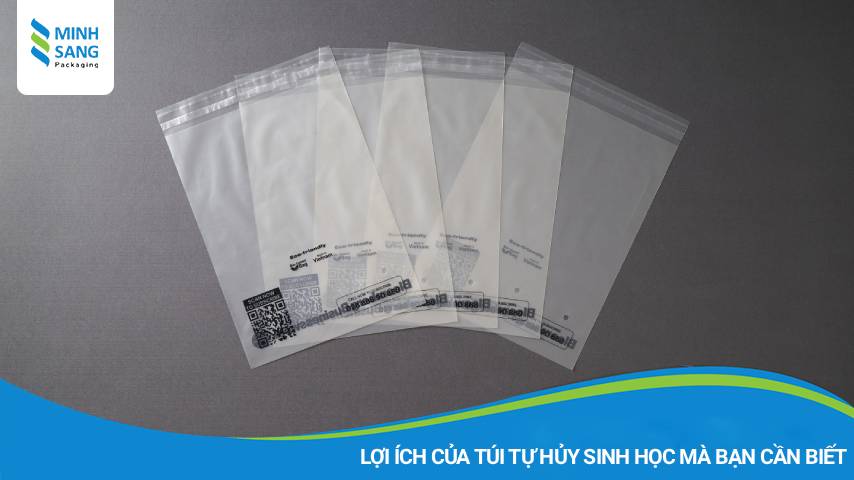
Distinguishing Between Biodegradable and Oxo-Degradable Bags
| Criteria | Biodegradable Bags | Oxo-Degradable Bags |
|---|---|---|
| Definition | A new type of plastic made entirely from renewable resources. | Traditional plastics (e.g., PE, PP) mixed with additives. |
| Composition | Mainly made from starch (corn, cassava), cellulose, or biopolymers like PLA, PBAT. | Traditional plastics with metal-based additives (like D2W, EPI) that trigger degradation. |
| Degradation Mechanism | Microorganisms (bacteria, fungi) digest polymer molecules, turning them into CO₂, H₂O, and organic matter — a biological process. | Additives react with oxygen, heat, and light to break down the plastic into small fragments — an oxidation process. |
| End Products | Completely decomposes with no toxic residue or microplastics. | Breaks into microplastics that remain in the environment and enter the food chain. |
| Decomposition Time | Faster (months to years), depending on conditions (industrial composting or home composting). | Degrades into microplastics over a few years — faster than regular plastic but not fully decomposable. |
| Environmental Impact | Truly sustainable, reduces plastic pollution, and is safe for the environment. | Still causes microplastic pollution. Many countries have banned or restricted this type as it’s not a real solution. |
Top 3 Common Types of Biodegradable Bags
The market today offers various biodegradable bags, mainly categorized by their material composition:
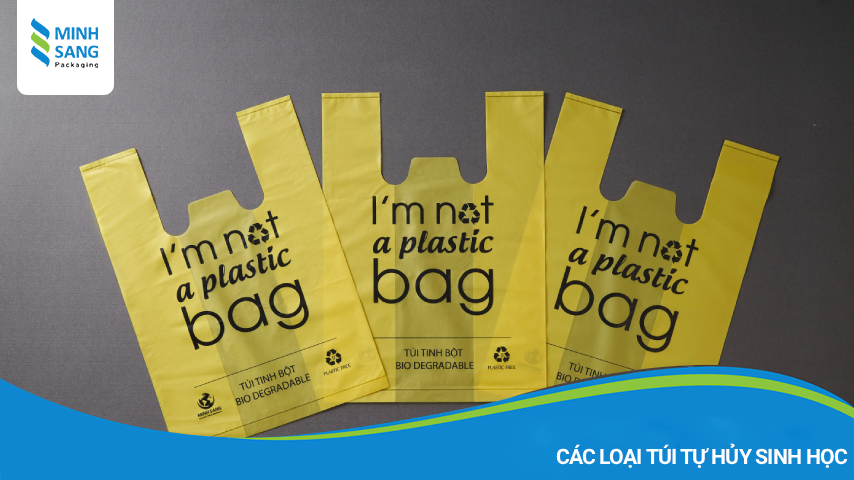
Plant-Starch Bags (PLA):
- Composition: Made from renewable starch sources like corn, cassava, or sugarcane, processed into polylactic acid (PLA).
- Features: PLA is a fully biodegradable and safe bioplastic. However, it tends to be more brittle and requires industrial composting conditions for rapid decomposition.
Biopolymer Blended Bags (PBAT):
- Composition: A blend of biopolymers such as Polybutylene Adipate Terephthalate (PBAT) with starch.
- Features: PBAT–starch blends are flexible, durable, and resemble conventional plastic bags. This is the most widely used type today due to its practicality and effective biodegradability.
PHA Bags (Polyhydroxyalkanoates):
- Composition: Produced directly by microorganisms.
- Features: PHA is one of the best biodegradable plastics, capable of decomposing in various environments, including soil and seawater. However, high production costs limit its widespread use.
4 Green Applications of Biodegradable Bags in Modern Life
Biodegradable bags are widely applied across multiple sectors, gradually replacing traditional plastic bags:
- Trash Bags: Used in households, offices, and industrial areas. They help reduce plastic waste in landfills and leave no toxic residue after decomposition.
- Shopping and Product Packaging Bags: Adopted by supermarkets, convenience stores, and fashion brands to create a green, sustainable brand image.
- Food Packaging: Suitable for fruits, vegetables, bread, and fresh foods. These bags are non-toxic and safe for direct food contact.
- Agricultural Films: Used in farming to retain soil moisture and suppress weeds. After harvest, the film decomposes naturally in the soil, reducing labor and costs for farmers.
Choosing the right type of biodegradable bag for each specific application helps optimize both environmental and economic benefits.
Minh Sang Packaging – Green Packaging Solutions in Vietnam
As one of Vietnam’s leading packaging manufacturers, Minh Sang Packaging not only produces traditional packaging but also focuses on developing eco-friendly solutions that align with global sustainability trends.
Green Packaging Products
Minh Sang’s biodegradable bags combine the durability and flexibility of conventional plastic with the ability to fully decompose into environmentally safe substances.
Key Products Include:
- Biodegradable Shopping Bags: For supermarkets, fashion stores, and convenience shops.
- Biodegradable Trash Bags: For effective organic waste disposal at home and offices.
International Certifications – Commitment to Quality and the Environment
At Minh Sang Packaging, we are committed to delivering high-quality, environmentally responsible products.
Our biodegradable packaging has passed strict quality assessments and received prestigious international certifications from TÜV AUSTRIA, one of the world’s leading certification bodies:
- OK Compost INDUSTRIAL: Certifies that our products can fully biodegrade under controlled industrial composting conditions (temperature and humidity).
- OK Biodegradable: Certifies that our products can naturally biodegrade in specific environments such as soil, freshwater, or seawater.
These certifications affirm not only product quality but also Minh Sang’s transparency and environmental responsibility.
Conclusion
Biodegradable bags are not just a trend—they represent a vital step forward in protecting our planet.
Choosing and using these products wisely will contribute positively to building a greener, more sustainable future.